Tag: child development

  • How Word Search Puzzles Help Kids Learn Vocabulary

    How Word Search Puzzles Help Kids Learn Vocabulary

    Remember those rainy afternoons spent hunched over a newspaper, circling letters with a bright red marker? For many of us, word searches were just a way to pass the time. But if you are a parent or educator looking for ways to boost a child’s literacy, you might be surprised to find that these simple grids are actually incredible tools for language development.

    Learn Latvian with Word Search Puzzles: Learn Latvian Language Vocabulary with C

    Finding words in a sea of random letters feels like a scavenger hunt for the brain. It turns the often-tedious task of studying new terms into a rewarding challenge. Instead of staring at a list of definitions, kids are actively hunting for patterns, which changes how they interact with new language.

    The Cognitive Mechanics of Word Hunting

    When a child sits down with a puzzle, their brain is doing much more than just scanning for a sequence of letters. They are engaging in several high-level cognitive processes simultaneously. This active engagement is what makes word searches more effective than passive reading.

    < p>First, there is the element of visual discrimination. To find the word “elephant,” a child has to recognize the specific shape of the letters and the way they sit next to each other. This strengthens the ability to distinguish between similar-looking characters, such as ‘b’ and ‘d’ or ‘p’ and ‘q’, which is a fundamental skill for early readers.

    Second, these puzzles encourage pattern recognition. The brain begins to look for clusters of vowels or specific consonant combinations. This training helps children recognize word boundaries and structures, making it easier for them to decode much longer, more complex words when they encounter them in books.

    How Word Searches Expand Vocabulary

    Expanding a child’s vocabulary isn’t just about memorizing long lists of words; it is about familiarity and context. Word searches provide a low-pressure environment to encounter new terminology.

    Building Word Familiarity

    If a child is working on a themed word search—perhaps about “Space” or “Ocean Life”—they are seeing words like “nebula” or “crustacean” repeatedly. Even if they don’t know the exact definition yet, the visual repetition builds a sense of familiarity. When they eventually see these words in a science textbook, they won’t feel intimidated because the word is already “known” to them.

    Improving Spelling Accuracy

    Spelling is essentially the ability to recall the correct sequence of letters. Because word searches require the child to track every single letter in a word to ensure they haven’t missed any, they are performing a subconscious spelling drill. They are physically tracing the correct order of letters, which reinforces muscle memory and mental mapping of the word’s structure.

    Contextual Learning Through Themes

    Using themed puzzles allows for a targeted educational experience. You can choose puzzles that align with what they are learning in school. If they are studying the solar system, a space-themed puzzle reinforces the curriculum in a way that feels like a break rather than extra homework.

    Age-Appropriate Recommendations

    Not all word searches are created equal. To prevent frustration or boredom, it is vital to select puzzles that match your child’s current developmental stage.

    • Preschool and Kindergarten (Ages 3-5): At this stage, focus on very small grids (5×5 or 6×6) with only 3-4 letter words. Avoid diagonal or backwards words entirely. The goal here is simply letter recognition and familiarity with basic sight words.
    • Early Elementary (Ages 6-8): You can introduce slightly larger grids and words that are 5-7 letters long. You might introduce simple horizontal and vertical placements. This is a great time to introduce themes like animals, colors, or family members.
    • and

    • Upper Elementary (Ages 9-12): This is where you can introduce more complexity. Use larger grids, longer words, and include diagonal or backwards words. This age group can handle more “difficult” vocabulary related to history, science, or literature.

    Practical Tips for Parents and Teachers

    While word searches are a fantastic indoor vs outdoor activity—perfect for long car rides or quiet classroom time—how you use them matters. Here are a few ways to maximize the learning potential:

    1. The “Definition Challenge”: Once a child finds a word, ask them if they know what it means. If they don’t, look it up together. This turns a simple game into a deep look at language.
    2. Create Your Own: For older kids, try making a custom puzzle using words from their favorite book or a recent science lesson. This gives them a sense of ownership over the activity.
    3. Use it as a Warm-up: Use a quick 5-minute word search as a “brain break” or a way to transition into a more intense study session.

    A Note on Safety and Screen Time

    If you are using digital word search apps, keep an eye on the safety and advertising settings. Many free apps are loaded with third-party ads that can be distracting or inappropriate. Whenever possible, physical paper puzzles are a great way to provide a much-needed break from screens while still engaging the brain. If you do go digital, look for apps specifically designed for education that offer an ad-free experience.

    Summary of Developmental Benefits

    To wrap things up, let’s look at the quick wins that word searches provide:

    • Enhanced visual perception and scanning skills.
    • Increased attention to detail and concentration.
    • Strengthened spelling and letter-sequence recognition.
    • Expanded vocabulary through themed, repetitive exposure.
    • Improved cognitive flexibility through pattern searching.

    Word searches are more than just a way to kill time. They are a gentle, effective, and fun way to help children build the linguistic foundations they need for lifelong reading success. Whether you are a teacher looking for a classroom activity or a parent trying to make learning more enjoyable, picking up a puzzle book is a great place to start.

    Ready to boost your child’s vocabulary? Grab a themed word search book today and turn study time into playtime!

    Our Top Picks

    Products we recommend:

    1. Learn Latvian with Word Search Puzzles: Learn Latvian Language Vocabulary with Challenging Word Find Puzzles for All Ages by David Solenky (Paperback)

    Learn Latvian with Word Search Puzzles: Learn Latvian Language Vocabulary with Challenging Word Find Puzzles for All Ages by David Solenky (Paperback)

    Learn Latvian with Word Search Puzzles: Learn Latvian Language Vocabulary with Challenging Word Find Puzzles for All Ages by David Solenky (Paperback)

    by BetterWorld.com – New, Used, Rare Books & Textbooks

    $5.73

    Check Price →

    2. Tarot Word Search: 78 Puzzles to Help You Learn the Meanings to the Cards

    Tarot Word Search: 78 Puzzles to Help You Learn the Meanings to the Cards

    Tarot Word Search: 78 Puzzles to Help You Learn the Meanings to the Cards

    by Indigo Books & Music

    $12.95

    Check Price →

    3. Word Search Puzzles

    Word Search Puzzles

    Word Search Puzzles

    by Knetbooks.com

    $9.93

    Check Price →

  • Screen-Free Activities That Boost Concentration In Children

    Screen-Free Activities That Boost Concentration In Children

    We have all been there. You look over at your child, and they are completely mesmerized by a tablet, eyes glazed, fingers twitching rhythmically across a glass screen. It is easy to let them stay there because it provides a moment of peace for you, but you might notice that when the device is finally put away, their ability to focus on a simple task like eating dinner or putting on shoes seems to have vanished. It is like their attention span has been fragmented into tiny, flickering pieces.

    Children Activities Book

    The constant dopamine hits from fast-paced videos and interactive games train a child’s brain to expect instant gratification. When life slows down, they get bored—and that boredom often manifests as restlessness. The good news is that you can rebuild that focus. By introducing intentional, offline play, you help their brains learn how to settle into a single task and stay there. Here is a practical guide to some of the most effective ways to help your child find their focus again.

    Why unplugging helps the developing brain

    Concentration is essentially a muscle. Just like physical muscles, it needs resistance and repetition to grow. Digital media, specifically short-form video content, provides “passive” stimulation. The brain doesn’t have to work to process the information because the screen does all the heavy lifting. In contrast, offline activities require “active” cognitive engagement.

    When a child engages in a hands-on task, they are practicing executive functions. These include working memory, cognitive flexibility, and inhibitory control. These skills are the building blocks of academic success and emotional regulation. Moving away from the screen allows the prefrontal cortex—the part of the brain responsible for planning and focus—to take the driver’s seat.

    Hands-on activities for younger children

    For the little ones, focus is often tied to sensory input. They need to feel, smell, and manipulate objects to stay engaged. At this stage, we aren’t looking for long periods of stillness, but rather “deep play” where they are fully absorbed in a sensory experience.

    Sensory bins and tactile play

    Sensory bins are an incredible budget friendly way to keep toddlers occupied. You don’t need expensive store-built kits; a simple plastic tub filled with dried rice, beans, or even water can work wonders. Adding small hidden objects like plastic dinosaurs or smooth stones encourages them to use their fine motor skills and persistence to find what is hidden.

    Building with blocks and magnetic tiles

    Construction play is best for toddlers and older kids alike because it requires spatial reasoning. Whether it is wooden blocks or magnetic tiles, the goal is the same: creating a structure that doesn’t fall over. This requires trial and error, which teaches them to manage frustration and stay focused on a physical goal.

    Safety Note: Always supervise very young children with sensory bins, especially if using small items like dried beans, to prevent choking hazards.

    Engaging older kids with complex tasks

    As children grow, their ability to sustain attention increases, but so does their susceptibility to distraction. For school-aged children, the goal is to introduce activities that have a clear “flow” state—that magical moment where they lose track of time because they are so immersed in what they are doing.

    Puzzles and logic games

    Jigsaw puzzles are a classic for a reason. They require a child to scan, categorize, and match patterns. This repetitive, methodical process is a direct workout for the attention span. If your child finds standard puzzles too easy, try logic-based games like Sudoku or even complex board games that require strategic planning and waiting for turns.

    Artistic expression and detailed crafts

    Activities like coloring, sketching, or even friendship bracelet making require a high level of fine motor precision. These tasks are inherently educational because they promote hand-eye coordination and patience. When a child is working on a detailed drawing, they are practicing the ability to ignore outside distractions to complete a specific visual goal.

    Reading and storytelling

    Reading is perhaps the ultimate concentration builder. Unlike a movie where the images are provided for them, reading requires the brain to actively construct a world. If your child struggles to sit still with a book, try audiobooks paired with coloring. This bridges the gap between passive listening and active engagement, making it easier for them to transition into pure reading.

    Nature-based movement and observation

    Sometimes, the best way to improve focus is to move the body. Physical activity helps regulate the nervous system, which can make sitting still much easier later on. Nature, specifically, offers a type of “soft fascination” that restores attention rather than depleting it.

    • Scavenger hunts: Give them a list of specific items to find—a jagged rock, a yellow leaf, a piece of bark. This turns a simple walk into a focused mission.
    • Gardening: Digging in the dirt, planting seeds, and watering plants teaches the concept of long-term rewards, which is the antithesis of the instant gratification found on screens.
    • Bird watching: This requires stillness and acute observation, training the eyes and ears to pick up on subtle changes in the environment.

    Tips for a successful transition

    You cannot simply take away a tablet and expect a child to immediately pick up a book. The transition requires a bit of strategy and patience from the adults in the room.

    1. Create a “boredom” buffer: Allow your child to be bored. Boredom is often the precursor to creativity. If we rush to fill every empty second with an activity or a screen, they never learn to generate their own ideas.
    2. Model the behavior: If you are scrolling through your phone while telling them to put their tablet away, the message is lost. Show them what focused, screen-free time looks like by reading a book or working on a hobby yourself.
    3. Set predictable boundaries: Use timers to signal when screen time is ending. This prevents the sudden “shock” to the system that often leads to tantrums.

    Building a child’s ability to concentrate is a marathon, not a sprint. Some days will be more successful than others, and that is perfectly fine. The goal is to slowly replace the fragmented attention of digital consumption with the deep, meaningful engagement that only the physical world can provide.

    If you are looking for more ways to support your child’s development, check out our latest collection of hands-on learning kits designed to spark curiosity and focus!

    Our Top Picks

    Products we recommend:

    1. 21 Activities that Really Work: Engaging Children in Their Faith

    21 Activities that Really Work: Engaging Children in Their Faith

    21 Activities that Really Work: Engaging Children in Their Faith

    by Indigo Books & Music

    $21.95

    Check Price →

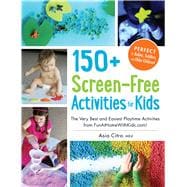
    2. 150+ Screen-Free Activities for Kids

    150+ Screen-Free Activities for Kids

    150+ Screen-Free Activities for Kids

    by BiggerBooks.com

    $13.39

    Check Price →

    3. 150+ Screen-Free Activities for Kids

    150+ Screen-Free Activities for Kids

    150+ Screen-Free Activities for Kids

    by eCampus.com

    $13.67

    Check Price →

  • How Word Search Puzzles Help Kids Learn Vocabulary

    How Word Search Puzzles Help Kids Learn Vocabulary

    We have all been there: it is a rainy Tuesday afternoon, the kids are restless, and you are desperately looking for a way to keep them occupied without handing over an iPad. You want something that feels like play but actually does some heavy lifting for their brain development. If you happen to have a stack of old word search books lying around, you might be sitting on a goldmine of learning potential.

    At first glance, word searches look like simple time-killers. However, beneath that grid of random letters, there is a lot of cognitive work happening. For a child, hunting for a hidden word isn’t just about circling letters; it is a complex exercise in pattern recognition, spelling, and memory. Let’s talk about why these puzzles are such a great tool for expanding a child’s vocabulary and how you can use them effectively.

    The cognitive mechanics of finding words

    When a child looks at a word search, their brain isn’t just scanning; it is performing several high-level tasks at once. First, they have to hold the target word in their working memory. They need to remember exactly how “elephant” is spelled while simultaneously scanning a sea of letters for the letter ‘E’. This strengthens the connection between visual recognition and mental recall.

    As they scan horizontally, vertically, and diagonally, they are practicing visual discrimination. This is the ability to see the subtle differences between similar-looking letters, like ‘b’ and ‘d’ or ‘p’ and ‘q’. This skill is fundamental for early reading success and helps prevent common spelling errors later in life.

    Strengthening spelling through repetition

    Spelling is often one of the most frustrating parts of learning a new language or expanding a vocabulary. Word searches take the pressure off by making spelling a visual game. Instead of being tested on a list of words, children are “discovering” them. Each time they find a word, they see it constructed letter by particular letter, reinforcing the correct sequence in their minds.

    This repetitive exposure helps move words from short-term recognition to long-term memory. Because the process is rewarding—finding a difficult word provides a tiny hit of dopamine—the learning feels much less like a chore and more like a victory.

    Developmental benefits across different ages

    Not all word searches are created equal. The way a four-year-old interacts with a puzzle is vastly different from how a ten-year-old does. To get the most out of this activity, you should tailor the difficulty to their current developmental stage.

    Early learners and preschoolers

    For the little ones, traditional word searches might be too overwhelming. Instead, look for “picture word searches” where they match a word to an image. At this stage, the goal is letter recognition and simple word association. While you won’t find complex grids best for toddlers, you can create simple 3×3 or 4×4 grids using very basic CVC (consonant-vowel-consonant) words like “cat,” “dog,” or “sun.” This builds the foundation for literacy without causing frustration.

    Elementary school students

    Once children enter primary school, they can handle more complex themes. This is the perfect time to introduce topical puzzles. If they are learning about space in science class, find or create a “Solar System” word search. This integrates their school curriculum with their downtime, making the vocabulary feel relevant and useful.

    Older children and pre-teens

    For older kids, the challenge should lie in the complexity of the words and the difficulty of the grid. You can introduce anagrams or clues where they have to solve a riddle to figure out which word they are searching for. This adds a layer of critical thinking and ensures they are truly engaging with the meaning of the words, not just the letters.

    Practical tips for parents and educators

    To turn a simple puzzle into a truly educational experience, you can use a few simple strategies to deepen the learning. It is about moving beyond the “find and circle” phase and into the “understand and use” phase.

    • Create a “Word Bank” Journal: Encourage your child to keep a small notebook. Every time they find a new or interesting word in a puzzle, have them write it down and try to use it in a sentence.
    • Themed Days: Rotate your themes to keep things fresh. One week could be “Ocean Life,” and the next could be “Kitchen Utensils.” This exposes them to a wide variety of niche vocabulary.
    • Time Challenges: For kids who love competition, use a stopwatch. Racing against the clock can increase engagement, but make sure the focus remains on accuracy rather than just speed.

    Safety and screen-free time

    One of the biggest advantages of word searches is that they provide a much-needed break from screens. In an era where kids spend significant time on tablets, physical puzzles offer a tactile experience that is much easier on the eyes. There are no ads, no notifications, and no blue light to interfere with sleep patterns.

    However, always keep an eye on the content of the puzzles. If you are downloading printables from the internet, ensure they are age-appropriate and free from any confusing or inappropriate themes. Safety in learning means providing a controlled, positive environment where they feel safe to make mistakes.

    Comparing different learning environments

    While we often think of puzzles as a quiet, indoor activity, they can actually fit into various parts of a child’s routine. When deciding on a learning activity, consider the setting.

    Indoor activities like word searches are perfect for rainy days or as a “cool down” after a high-energy period. They help transition the brain from a state of high excitement to a state of focused calm. On the other hand, if you are looking for indoor vs outdoor balance, you can take word search books on a picnic or to the park. The change of scenery can prevent the activity from feeling like “schoolwork” and turn it into a relaxing part of a family outing.

    Making the most of puzzle time

    Ultimately, the goal is to foster a love for language. If a child struggles with a particular puzzle, don’t force them to finish it. Instead, sit with them and hunt for the words together. This turns a solitary task into a bonding moment and reduces the anxiety associated with “getting it wrong.”

    By treating word searches as a tool for exploration rather than just a way to pass the time, you are helping your child build a much stronger linguistic foundation. It is a simple, low-cost, and highly effective way to boost their confidence and their vocabulary all at once.

    Ready to boost your child’s vocabulary? Start by grabbing a themed puzzle book today or try creating your own custom word search using their favorite hobby as a theme. It is a small step that can lead to big improvements in their reading and writing skills!

    Our Top Picks

    Products we recommend:

    1. Large Print Learn German With Word Search Puzzles: Learn German Language Vocabulary With Challenging Word Search Puzzles

    Large Print Learn German With Word Search Puzzles: Learn German Language Vocabulary With Challenging Word Search Puzzles

    Large Print Learn German With Word Search Puzzles: Learn German Language Vocabulary With Challenging Word Search Puzzles

    by Indigo Books & Music

    $14.50

    Check Price →

    2. Learn Latvian with Word Search Puzzles: Learn Latvian Language Vocabulary with Challenging Word Find Puzzles for All Ages by David Solenky (Paperback)

    Learn Latvian with Word Search Puzzles: Learn Latvian Language Vocabulary with Challenging Word Find Puzzles for All Ages by David Solenky (Paperback)

    Learn Latvian with Word Search Puzzles: Learn Latvian Language Vocabulary with Challenging Word Find Puzzles for All Ages by David Solenky (Paperback)

    by BetterWorld.com – New, Used, Rare Books & Textbooks

    $5.73

    Check Price →

  • Screen-Free Activities That Boost Concentration In Children

    Screen-Free Activities That Boost Concentration In Children

    We have all been there. You look over, and your child is completely mesmerized by a tablet, eyes glazed, fingers twitching in rhythm with a bright, flashing game. It feels easy in the moment—it gives you a much-needed break to finish your coffee or answer an email. But then, the moment the screen goes dark, the meltdown begins. The transition is hard, and you might notice that their ability to focus on a simple task, like putting on shoes or finishing a meal, seems to have vanished.

    Children Activities Book

    The constant stimulation from high-speed videos and interactive apps trains the brain to expect instant gratification. When real life doesn”t move at sixty frames per second, kids struggle to stay present. The good news is that you can retrain that “attention muscle” through intentional, offline play. By introducing activities that require sustained effort, you help them rebuild their ability to concentrate.

    Why focus matters for growing minds

    Concentration is more than just sitting still; it is the foundation for learning, emotional regulation, and problem-solving. When a child engages in an activity that requires them to follow a sequence of steps or persist through a challenge, they are practicing executive function. This is the mental toolkit they use to plan, focus, and multitask later in life.

    Unlike digital entertainment, which feeds the brain dopamine on demand, offline activities often involve a “slow burn.” There is a period of boredom or mild frustration before the fun kicks in. Navigating that middle ground is exactly where the real cognitive growth happens. It teaches them that satisfaction comes from persistence, not just clicking a button.

    Activities for the youngest learners (Ages 2-4)

    For toddlers, focus is often about sensory engagement. At this stage, we aren’t looking for long periods of sitting, but rather “deep play” where they are fully immersed in a single sensation or task.

    Sensory bins and tactile play

    Filling a large tub with dried beans, rice, or water beads and hiding small plastic animals inside is best for toddlers who need to ground themselves. This type of play encourages them to use their fine motor skills and stay focused on a singular goal: finding the hidden treasures. It is a quiet, rhythmic activity that naturally lowers cortisol levels.

    Simple sorting tasks

    Grab a muffin tin and a bowl of colorful buttons or large pom-poms. Asking a child to sort them by color or size is an educational way to introduce logic. Because it is a repetitive motion, it helps settle a restless mind and builds the stamina needed for more complex tasks later on.

    Safety Note: Always supervise sensory play closely. Small objects like buttons or beads pose a significant choking hazard for children under three.

    Building stamina in preschool and early elementary (Ages 5-7)

    As children enter school age, their ability to follow multi-step instructions grows. This is the perfect time to introduce activities that have a clear beginning, middle, and end.

    Jigsaw puzzles

    Puzzles are legendary for a reason. They require visual discrimination and spatial reasoning. A child has to look at a shape, hold it in their mind, and scan the board to find a match. This “scanning and matching” process is a direct workout for the prefrontal cortex. Start with 24 pieces and gradually increase the complexity as their confidence grows.

    Board games with rules

    Games like Candy Land or Chutes and Ladders are age appropriate because they rely on turn-taking and following a set structure. These games teach children to wait—a fundamental component of concentration. Learning to handle the “loss” of a game is also a vital part of developing the emotional resilience needed to stay focused during difficult schoolwork.

    Artistic endeavors

    Drawing, coloring, or even modeling with clay requires a child to commit to a vision. When a child decides to draw a dragon, they have to think about the wings, the scales, and the tail. This sustained attention to detail is a direct antidote to the “quick-fix” nature of digital media.

    Deep focus for older children (Ages 8-12)

    Older kids can handle much higher levels of complexity. At this age, the goal is to find “flow”—that state where they are so engaged in a task that time seems to disappear.

    • Lego construction: Following complex instruction manuals requires intense reading comprehension and spatial awareness.
    • Strategy games: Chess or even complex card games like Rummy require predicting an opponent’s moves, which builds long-term planning skills.
    • Model building: Whether it is a wooden birdhouse or a science kit, these projects demand precision and patience.
    • Solo hobbies: Learning to knit, crochet, or play a musical instrument provides a sense of mastery that digital games simply cannot replicate.

    How to introduce these changes without the drama

    You cannot simply rip a tablet away and expect a child to pick up a book immediately. Their brains are currently wired for high stimulation, so the transition needs to be gradual and supported.

    First, try to model the behavior. If we are constantly scrolling through our phones while telling our kids to “go play,” we aren’t setting them up for success. Try setting aside “family focus time” where everyone—adults included—puts their devices in a basket and engages in a shared activity like a board game or a craft.

    Second, make the environment inviting. If you want them to read, have books easily accessible, not tucked away on a high shelf. If you want them to build, have the Lego bin sitting on the rug. Reducing the friction between the child and the activity is key.

    Lastly, embrace the boredom. It is tempting to jump in and “entertain” your child the moment they start whining. However, boredom is often the precursor to creativity. When a child is bored, their brain begins to search for ways to stimulate itself, which is often when the most profound, focused play begins.

    If you are looking for more ways to support your child’s development, check out our collection of hands-on learning kits designed to spark curiosity and quiet the digital noise. Let’s bring the joy of focused play back into your home!

    Our Top Picks

    Products we recommend:

    1. 21 Activities that Really Work: Engaging Children in Their Faith

    21 Activities that Really Work: Engaging Children in Their Faith

    21 Activities that Really Work: Engaging Children in Their Faith

    by Indigo Books & Music

    $21.95

    Check Price →

    2. 150+ Screen-Free Activities for Kids

    150+ Screen-Free Activities for Kids

    150+ Screen-Free Activities for Kids

    by BiggerBooks.com

    $13.39

    Check Price →

    3. 150+ Screen-Free Activities for Kids

    150+ Screen-Free Activities for Kids

    150+ Screen-Free Activities for Kids

    by Knetbooks.com

    $17.08

    Check Price →