
Ever feel like you’re competing with a glowing rectangle just to get your child to listen to a simple instruction? You aren’t alone. We see it every day: kids who can navigate a complex tablet game with lightning speed, yet struggle to sit still for a ten-minute story or finish a single coloring page. It’s frustrating, but it’s not necessarily a sign of a permanent attention deficit. Often, it’s just that digital stimulation provides a constant stream of dopamine hits that real-world tasks simply can’t match.

The good news is that we can help retrain those focus muscles. By introducing intentional, screen-free play, we can help kids practice sustained attention, patience, and deep thinking. The goal isn’t to ban technology entirely, but to balance it with activities that require a slower, more deliberate pace.
Why focus matters for growing minds
Concentration is a skill, much like riding a bike or tying shoelaces. It requires practice. When a child engages in an activity that doesn’t offer instant gratification, they are learning how to manage boredom and push through mental fatigue. This is a fundamental part of cognitive development.
Activities that require “deep work”—even if it’s just building a Lego tower—help strengthen the prefrontal cortex. This area of the brain is responsible for executive functions like planning, impulse control, and task switching. When we provide opportunities for focused play, we are essentially giving their brain a workout that prepares them for school and life.
Hands-on activities for toddlers and preschoolers
For the youngest learners, concentration is all about sensory engagement. At this age, “focus” looks like staying with one sensation for a few minutes rather than running from one toy to the next. These activities are usually budget friendly because they often use items you already have in your pantry or recycling bin.
Sensory bins and tactile play
Fill a plastic tub with dried rice, beans, or even water. Hide small plastic animals or colorful beads inside. This type of play encourages fine motor skills and keeps little hands busy, which naturally extends their attention span. It is a great way to introduce “quiet time” without the pressure of a structured lesson.
Sorting and categorizing
Grab a muffin tin and a bowl of colorful buttons or different shaped pasta. Ask your toddler to sort them by color or size. This simple task requires visual discrimination and repetitive motion, both of which are excellent for building foundational concentration skills.
Safety note for little ones
Always supervise sensory play, especially when using small objects like beads or dried beans, to prevent choking hazards.
Engaging older children with complex tasks
As kids enter school age, their ability to focus can expand, but so does their desire for novelty. To keep them engaged, we need to offer challenges that feel rewarding. This is where we look at the balance of indoor vs outdoor options to keep things fresh.
Puzzles and logic games
Jigsaw puzzles are the gold standard for building patience. They require a child to observe small details, recognize patterns, and work toward a long-term goal. If a 100-piece puzzle feels too daunting, start smaller to ensure the experience remains positive and age appropriate.
- Board Games: Strategy games like Chess or even simple classics like Snakes and Ladders teach turn-taking and following multi-step rules.
- Solo Logic Puzzles: Sudoku for kids or Rubik’s Cubes provide that “aha!” moment that mimics the satisfaction of a digital win.
Creative construction
Building sets, whether they are wooden blocks, Magnetiles, or complex Lego kits, are incredible for concentration. Unlike a movie that plays for you, construction requires constant decision-making. They have to figure out how to balance a structure or where the next piece fits. This “problem-solving loop” is exactly what helps bridge the gap between short-term distraction and long-term focus.
Artistic expression and detailed crafts
Activities like watercolor painting, friendship bracelet making, or even clay modeling require a steady hand and a lot of presence. These tasks are inherently slow. You can’t rush a watercolor wash or a complex knot, and that forced slowness is exactly what helps reset a brain that is used to the high-speed scrolling of a smartphone.
Outdoor adventures to reset the brain
Sometimes, the best way to improve focus is to step away from the four walls of the house. Nature provides a type of “soft fascination” that is restorative. Unlike the “hard fascination” of a screen, which demands constant attention, nature allows the mind to wander while still staying anchored to the environment.
Nature scavenger hunts
Give your child a list of things to find: a jagged rock, a yellow leaf, a piece of bark, or a feather. This turns a simple walk into an active observation task. They aren’t just walking; they are scanning, analyzing, and searching. It turns the environment into a giant, interactive puzzle.
Gardening and bug hunting
Digging in the dirt or observing an ant colony requires a high level of observation. Gardening, in particular, is a long-term commitment. Watching a seed sprout and tending to a plant daily teaches the concept of delayed gratification—a core component of a focused mind.
Finding the right balance
It is easy to feel overwhelmed by the sheer number of options, but remember that you don’t need a room full of expensive toys to make this work. The most effective activities are often the simplest. The key is consistency. Try to establish a “tech-free” window every day—perhaps during dinner or the hour before bed—to allow the brain to settle.
Don’t be discouraged if your child struggles to stay engaged at first. If they jump from the puzzle to the blocks within two minutes, that’s okay. They are still practicing. Over time, as they experience the satisfaction of completing a task without a screen, you will see their ability to concentrate grow naturally.
If you’re looking for more ways to support your child’s development, check out our other guides on mindful parenting and educational play!
Our Top Picks
Products we recommend:
1. 150+ Screen-Free Activities for Kids

2. 150+ Screen-Free Activities for Kids
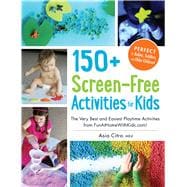
3. 150+ Screen-Free Activities for Kids
