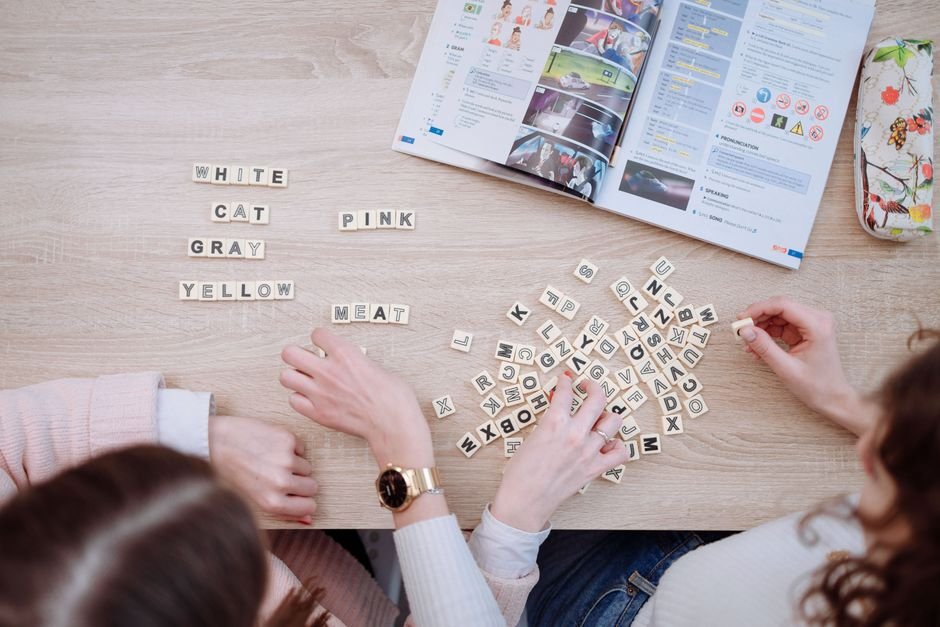
We have all been there. You are trying to find a quiet activity to keep your child occupied during a long car ride or a rainy afternoon, and you want something that isn’t just another mindless screen-time session. You want something that actually helps them grow. It is easy to overlook the humble word search, assuming it is just a way to pass the time, but there is much more happening under the surface of those grids of letters.
As parents and educators, we are constantly looking for ways to make learning feel less like a chore. The beauty of a well-designed puzzle is that it disguises hard work as play. When a child is hunting for words, they aren’t just scanning for patterns; they are engaging in a complex cognitive workout that builds the foundation for literacy and language fluency.
The Cognitive Mechanics Behind Word Hunting
At first glance, looking for a hidden word seems simple. However, the brain has to perform several high-level tasks simultaneously. To find “apple” in a sea of random letters, a child must first recognize the sequence of letters, hold that sequence in their working memory, and then scan the grid visually to match the patterns.
This process strengthens visual discrimination, which is the ability to see the subtle differences between similar-looking letters like ‘b’ and ‘d’ or ‘p’ and ‘q’. Developing this skill early on is a huge advantage for reading comprehension. If a child can quickly distinguish letter shapes in a puzzle, they will find it much easier to decode words when they sit down to read a chapter book.
Building Pattern Recognition Skills
Pattern recognition is a fundamental building block of mathematical and linguistic intelligence. Word searches require children to identify horizontal, vertical, and even diagonal sequences. This training helps the brain become more adept at spotting structures in language, such as prefixes, suffixes, and root words.
Improving Focus and Concentration
In an era of short-form videos and constant notifications, sitting still to complete a single task is becoming harder for many kids. A word search demands sustained attention. You cannot find the words if you are constantly looking away. This practice helps improve “deep work” capabilities, teaching children how to focus on a singular goal until it is accomplished.
How Vocabulary Grows Through Play
Expanding a child’s vocabulary isn’t just about memorizing definitions; it is about familiarity and context. When a child sees a word repeated in a puzzle, the visual imprint stays with them. They begin to recognize the “shape” of the word even before they can fully define it.
- Contextual Learning: Many word searches are themed, such as “Space,” “Ocean,” or “Garden.” This groups related terms together, helping kids associate specific words with broader concepts.
- Spelling Reinforcement: As children hunt for words, they are essentially practicing spelling without the pressure of a spelling test. They must verify each letter in order, which reinforces correct orthography.
- Word Familiarity: Repeated exposure to new terms through puzzles builds a “mental dictionary” that makes reading smoother and more enjoyable.
–
Because these puzzles are budget friendly, you can introduce new themes every week without breaking the bank. You might start with easy seasonal themes and move toward more complex scientific or historical topics as they grow.
Tailoring Puzzles to Different Ages
Not all word searches are created equal. To keep a child from getting frustrated or bored, you need to select age appropriate materials that match their current developmental stage.
Preschool and Kindergarten (Ages 3-5)
At this stage, focus on very small grids (perhaps 5×5 or 6×0) with large, clear print. The words should be short—mostly three or four letters long. Instead of complex hidden words, look for puzzles that focus on letter recognition or simple CVC (consonant-vowel-consonant) words like “cat,” “dog,” or “sun.”
Early Elementary (Ages 6-8)
This is the sweet spot for themed puzzles. Words can be slightly longer, and you can introduce vertical and horizontal placements. Themes like animals, colors, or family members work wonders here. This is a great time to introduce “educational” puzzles that align with what they are learning in school, such as basic addition terms or parts of a plant.
Older Children (Ages 9+)
For older kids, the challenge should move toward complexity. You can introduce diagonal and backward words. The vocabulary can become much more sophisticated, incorporating science terminology, historical figures, or even literary themes. This keeps the “game” aspect challenging enough to prevent boredom.
Safety and Healthy Habits
While word searches are a wonderful tool, it is always wise to keep an eye on how they are being used. If you are using digital word search apps, ensure they are ad-free and do not contain in-app purchases that could lead to accidental spending. Physical books are often the safest and most educational choice for younger children as they eliminate screen fatigue.
Additionally, keep an eye on the difficulty level. If a puzzle is too hard, it can lead to “learned helplessness,” where a child feels they simply aren’t “good at puzzles.” Always provide a way for them to check their work or offer a hint to keep the momentum going. The goal is to foster a love for language, not a frustration with it.
Practical Ways to Use Puzzles in Daily Life
You don’t need a formal “lesson time” to make this work. Some of the best learning happens during incidental moments. Here are a few ways to integrate these puzzles into your routine:
- The Travel Companion: Keep a folder of various difficulty levels in the car for long trips.
- The Morning Warm-up: Use a single puzzle as a “brain breakfast” while they eat their cereal.
- The Reward System: Use completed puzzles as a way to celebrate finishing a larger task, like cleaning their room.
- Collaborative Play: Sit down and do the puzzle together. This turns a solitary activity into a bonding moment and allows you to discuss the meanings of the words you find.
Ultimately, word searches are more than just a way to kill time. They are a gentle, effective, and enjoyable way to sharpen the mind and expand a child’s linguistic horizons. By bringing these simple puzzles into your home, you are providing a toolkit for lifelong literacy.
If you are looking for ways to boost your child’s vocabulary this week, why not grab a new themed word search book and start hunting? It is a small step that can lead to big improvements in their reading confidence.