
If you have ever sat at a kitchen table with a child, watching their eyes dart frantically across a grid of letters, you know that specific look of intense concentration. It is a mix of frustration and pure, unadulterated excitement when they finally spot that hidden word. We often view word searches as simple “time-fillers” for long car rides or rainy afternoons, but there is actually a lot happening under the surface of those letter grids. While they look like simple games, these puzzles act as a quiet training ground for language development.
Learning new words doesn”t always have to involve flashcards or repetitive drills. In fact, some of the most effective learning happens when a child is so focused on the “hunt” that they don’t even realize they are studying. Let’s look at why these puzzles are such a practical tool for expanding a child’s vocabulary and how you can use them effectively at home.
Building Word Recognition and Spelling Skills
At its core, a word search requires a child to recognize the specific sequence of letters that make up a word. This might sound obvious, but for a developing brain, the ability to scan a grid and identify “B-A-N-A-N-A” is a significant cognitive task. When a child searches for a word, they are essentially practicing spelling in a non-threatening way.
Unlike a spelling test, where the pressure is on to produce the correct letters from memory, a word search provides the “answer” right there on the page. This visual reinforcement helps cement the spelling patterns in their mind. They see the word, they find it, and they trace it with their finger. This repetitive visual contact helps bridge the gap between seeing a word and being able to recall its structure later.
Strengthening Visual Discrimination
Visual discrimination is the ability to see the differences between similar shapes, letters, and patterns. This is a foundational skill for reading. In a word search, a child has to distinguish between a “p,” a “q,” and a “d” amidst a sea of other characters. They have to notice when a word is written horizontally versus vertically or even diagonally. This level of detail-oriented scanning builds the ocular muscles and the mental focus needed for reading long passages of text without skipping lines or losing their place.
Expanding Vocabulary Through Context and Themes
One of the best ways to use word searches is to choose themes. Instead of random letters, a puzzle centered around “Space,” “Ocean Life,” or “Dinosaurs” introduces a curated set of new terms. This thematic approach allows children to learn words in a cluster, making them much easier to remember.
When a child sees the word “nebula” or “crustacean” hidden in a grid, they aren’t just seeing letters; they are associating that word with a specific concept. This creates mental hooks. If you are looking for something age appropriate for a five-year-old, stick to simple themes like “Colors” or “Animals.” For older kids, you can introduce more complex scientific or historical terms to keep them challenged.
- Toddler/Preschool Level: Focus on 3-4 letter words and very large grids. These are best for toddlers who are just starting to recognize letter shapes.
- Early Elementary: Use themes like “Weather” or “Community Helpers.” Introduce words that include blends like “str” or “ch.”
- Upper Elementary: Introduce science-based or literature-based puzzles. This is where you can use more complex, multi-syllabic words.
- Middle School: Use vocabulary words from their current reading list or social studies curriculum to reinforce classroom learning.
ty
Cognitive Benefits Beyond Just Words
While vocabulary is the star of the show, the mental workout provided by these puzzles extends far beyond language. Solving a word search is a complex problem-solving exercise. It requires planning, pattern recognition, and persistence.
Children often encounter “the wall”—that moment where they feel they can’t find the last remaining word. Pushing through that frustration is a lesson in grit. They learn to change their strategy, perhaps by scanning from bottom to top or looking for specific letters like ‘Z’ or ‘X’ first. This develops executive functions, such as working memory and cognitive flexibility.
Developing Concentration and Focus
In a world full of quick-moving digital distractions, sitting down with a paper-and-pencil puzzle is a great way to practice sustained attention. Unlike a tablet game that might offer instant dopamine hits through sounds and animations, a word search requires a steady, quiet focus. This “slow” type of engagement is incredibly beneficial for a child’s ability to focus on schoolwork or reading books.
Practical Tips for Parents and Educators
To get the most out of these puzzles, it helps to treat them as an interactive activity rather than just a solo task. You can turn a simple puzzle into a conversation about the words found within it.
- Ask follow-up questions: Once they find the word “Arctic,” ask them what they know about the Arctic. This moves the activity from simple recognition to true comprehension.
- Create your own: For a fun weekend project, write a custom puzzle using words from a recent family vacation or a favorite movie. This makes the learning deeply personal.
- Mix up the environment: While word searches are a perfect indoor vs outdoor activity—great for a quiet corner of the library or a shady spot in the park—changing the scenery can keep the engagement high.
A quick note on safety and developmental balance: While word searches are wonderful, ensure the difficulty level matches the child’s current abilities. If a puzzle is too hard, it can lead to discouragement rather than learning. Always supervise younger children to ensure they aren’t using pens or markers that could be messy or harmful if misused, and always encourage a balance between screen time and these tactile, paper-based activities.
If you are looking to expand your child’s toolkit for learning, consider adding a variety of word puzzles to your rotation. Whether it’s word searches, crosswords, or anagrams, providing these mental puzzles can turn “boredom” into a massive leap in literacy.
Ready to start your next learning adventure? Grab a pack of themed word search books today and see how much fun vocabulary building can be!
Our Top Picks
Products we recommend:
1. Large Print Learn German With Word Search Puzzles: Learn German Language Vocabulary With Challenging Word Search Puzzles
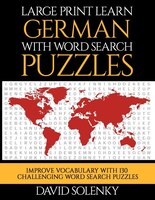
Large Print Learn German With Word Search Puzzles: Learn German Language Vocabulary With Challenging Word Search Puzzles
by Indigo Books & Music
$14.50
2. Learn Latvian with Word Search Puzzles: Learn Latvian Language Vocabulary with Challenging Word Find Puzzles for All Ages by David Solenky (Paperback)
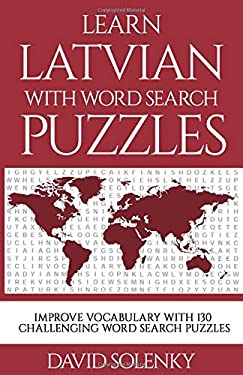
Learn Latvian with Word Search Puzzles: Learn Latvian Language Vocabulary with Challenging Word Find Puzzles for All Ages by David Solenky (Paperback)
by BetterWorld.com – New, Used, Rare Books & Textbooks
$5.73