Tag: educational toys

  • Best Educational Puzzle Books For Kids Ages 3-5

    Best Educational Puzzle Books For Kids Ages 3-5

    If you have ever sat on the floor with a preschooler, you know that “quiet time” is often anything but quiet. One minute they are zooming toy cars across the rug, and the next, they are asking why the sky is blue. Finding activities that actually hold their attention while helping them learn can feel like a constant search for hidden treasure. This is where puzzle books come in. Unlike a tablet screen that offers instant gratification, a good puzzle book invites a child to slow down, think, and solve a problem at their own pace.

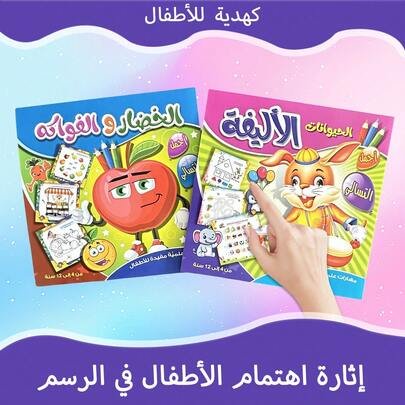
    Two Multifunctional Children's Educational Books, Including Arabic Coloring Book

    Choosing the right books for this specific age group is tricky. You want something challenging enough to keep them from getting bored, but not so hard that they throw the book across the room in frustration. For kids between 3 and 5, the goal is to find materials that feel like play but are secretly building foundational skills like fine motor control, pattern recognition, and early literacy.

    Why puzzle books are great for preschool development

    At this age, a child’s brain is like a sponge, soaking up everything in their environment. Puzzles provide a structured way to practice cognitive skills without the pressure of a formal classroom setting. When a child works through a logic puzzle or a matching game, they are practicing several key areas of growth simultaneously.

    • Problem-solving skills: Navigating a maze or finding a hidden object requires kids to plan their moves and adjust when they hit a dead end.
    • Fine motor precision: Using a crayon to trace lines or connect dots strengthens the small muscles in their hands, which is essential for learning to write later on.
    • Concentration and focus: Completing a single page provides a sense of accomplishment that helps extend their attention span.
    • Visual discrimination: Learning to spot differences between two similar images helps with early reading skills, as they learn to distinguish between similar-looking letters.

    While these benefits are fantastic, it is helpful to remember that the primary goal for a 3-year-old is enjoyment. If the book feels too much like “work,” they will lose interest quickly. Look for books that use bright colors and familiar themes like animals, dinosaurs, or space.

    Top types of puzzle books for ages 3 to 5

    Not all puzzle books are created equal. Depending on your child’s specific interests and current skill level, you might want to mix and match different styles. Here is a breakdown of the most effective formats for this developmental stage.

    Dot-to-dot and tracing books

    These are arguably the best for toddlers who are just starting to master grip. Tracing books often feature large, easy-to-undestand shapes. They help bridge the gap between scribbling and purposeful drawing. As they move toward age five, you can transition to more complex dot-to-dots that require following a numerical sequence, which reinforces early math skills.

    Search and find adventures

    Think of these as the “Where’s Waldo” for younger kids. These books are incredibly educational because they encourage scanning and detail orientation. They ask the child to find specific items within a crowded, colorful scene. This type of activity is wonderful for building vocabulary as you name the objects they find together.

    Logic and pattern matching

    For the slightly older end of this range—around age 4 or 5—logic puzzles become much more engaging. These might involve completing a sequence (red circle, blue square, red circle…) or matching shadows to objects. These books are great for developing the “if/then” thinking that is so important for scientific and mathematical reasoning.

    Mazes and path-finding

    Mazes are a classic for a reason. They provide a clear beginning and end, which gives a child a tangible sense of victory. For a 3-year-old, look for wide, simple paths. For a 5-year-old, you can introduce more twists and turns to keep them engaged.

    What to look for when shopping

    When you are browsing the aisles or scrolling through online shops, keep a few practical things in mind to ensure the book is age appropriate for your little one.

    1. Paper thickness: Preschoolers can be heavy-handed. Look for books with thicker paper or even “wipe-clean” laminated pages that allow for repeated use with a dry-erase marker.
    2. Complexity level: Check the back cover or sample pages. If the instructions look too wordy, your child will likely need you to sit with them for every single page.
    3. Instruction clarity: The best books use visual cues rather than long paragraphs of text. A small icon of a pencil or a magnifying glass tells the child exactly what to do.
    4. Variety: A book that only features one type of puzzle might get old quickly. Look for “activity books” that mix mazes, coloring, and stickers.

    A quick note on safety

    While books are generally very safe, always keep an eye on any included accessories. If a puzzle book comes with small stickers or loose pieces, ensure they are large enough that they don’t pose a choking hazard for younger siblings. Additionally, always supervise very young children when using markers or crayons to ensure they aren’t attempting to use them in ways they shouldn’t.

    How to make puzzle time more engaging

    You don’t have to just hand over a book and walk away. You can turn these activities into a shared bonding experience. Try sitting next to them and narrating what you see. If they are stuck on a maze, instead of giving the answer, ask, “I wonder what happens if we try to go this way instead?” This encourages them to think critically rather than just following your lead.

    You can also use these books to integrate other learning areas. If they are doing a dot-to-dot, count the dots out loud together. If they are finding animals, talk about the sounds those animals make. This turns a simple workbook into a multi-sensory learning session.

    Ultimately, the best puzzle book is the one that makes your child excited to pick it up. Whether they are mastering their first shapes or navigating their first complex maze, these little books are wonderful tools for growth. If you’re looking to expand your child’s library, start by observing what they naturally gravitate toward—is it animals, numbers, or searching for hidden objects? Once you know their interest, finding the perfect companion for their learning journey becomes much easier.

    Ready to find the perfect activity for your little learner? Check out our curated collection of activity books and start your next adventure today!

    Our Top Picks

    Products we recommend:

    1. Wooden Chess Toy for Kids, Educational Memory Puzzle, Ages 5+

    Wooden Chess Toy for Kids, Educational Memory Puzzle, Ages 5+

    Wooden Chess Toy for Kids, Educational Memory Puzzle, Ages 5+

    by OnBuy.com

    $19.40

    Check Price →

    2. Sloth 24 Piece Kids Puzzle – Fun & Educational Puzzle for Ages 4+

    Sloth 24 Piece Kids Puzzle - Fun & Educational Puzzle for Ages 4+

    Sloth 24 Piece Kids Puzzle – Fun & Educational Puzzle for Ages 4+

    by DiscountMags.com

    $14.99

    Check Price →

    3. Kids^3D Dinosaur Puzzle Educational Toy for Ages 5+ Bright Colourful Design

    Kids^3D Dinosaur Puzzle Educational Toy for Ages 5+ Bright Colourful Design

    Kids^3D Dinosaur Puzzle Educational Toy for Ages 5+ Bright Colourful Design

    by OnBuy EU

    $47.24

    Check Price →

  • Best Educational Puzzle Books For Kids Ages 3-5

    Best Educational Puzzle Books For Kids Ages 3-5

    If you have ever spent a rainy afternoon trying to entertain a preschooler, you know that “boredom” can turn into a whirlwind of chaos pretty quickly. We all want to find activities that keep them occupied, but we also want those moments to actually mean something for their development. This is where puzzle books come in as a total lifesaver. Unlike a tablet screen, a physical book offers a tactile experience that helps little hands learn to focus and solve problems without the blue light fatigue.

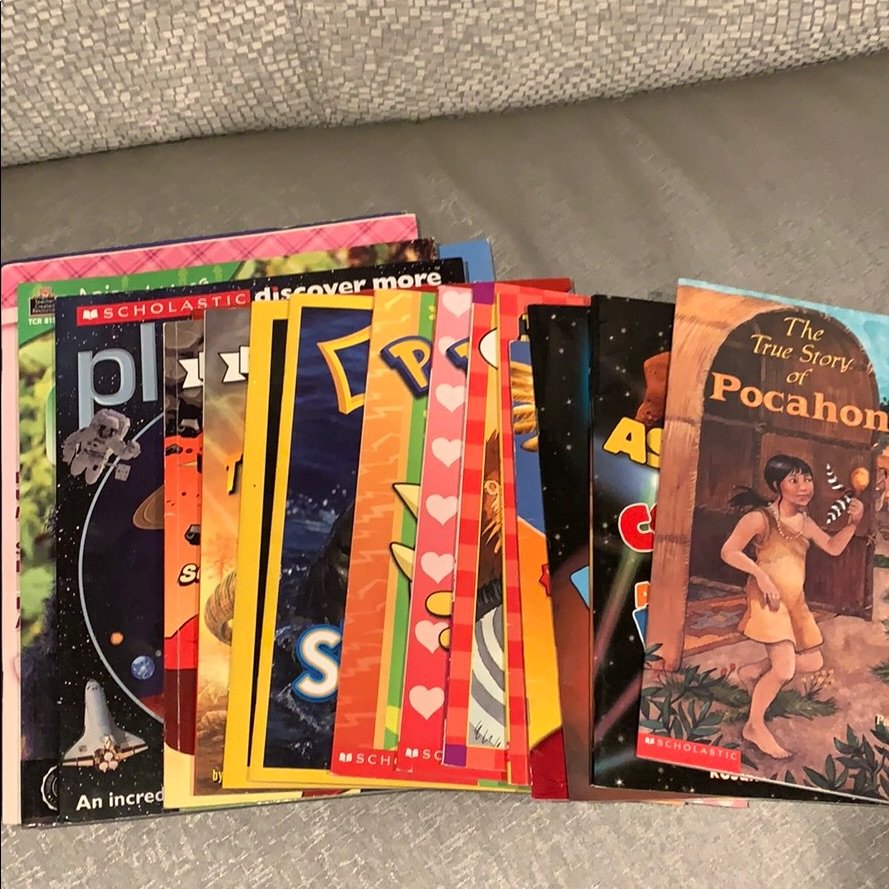
    Assorted Kids Educational Books

    Finding the right balance is the tricky part. If a book is too hard, a child might get frustrated and throw it across the room. If it is too easy, they will lose interest in five minutes. For kids in the 3 to 5 age range, the goal is to find materials that feel like a game but secretly act as brain training. I have spent a lot of time looking through various options to find the ones that truly hit that sweet spot of being age appropriate and genuinely fun.

    Why Puzzle Books Matter for Preschoolers

    At this stage of life, your child’s brain is like a sponge, absorbing everything through trial and error. Puzzles are essentially controlled versions of that trial and error. When a child works through a logic puzzle or a matching game, they are building foundational cognitive skills that will serve them well when they eventually start formal schooling.

    Building Fine Motor Skills

    Holding a chunky crayon or a small finger puppet to trace a line in a book requires precise movements. These small actions strengthen the muscles in the hands and wrists. This physical development is the precursor to being able to hold a pencil correctly for writing later on.

    Boosting Problem-Solving Abilities

    Every time a child figures out which shape fits into which slot, or identifies a pattern in a sequence, they are practicing logic. They are learning to look at a problem, analyze the pieces, and find a solution. This builds a sense of competence and confidence that is vital for early childhood development.

    Improving Concentration and Patience

    In a world full of instant gratification, sitting down with a book requires a different kind of effort. Puzzles encourage “deep work” for toddlers. Learning to stay seated and focus on a single task for even ten minutes is a huge win for their attention span.

    Top Recommendations for 3-Year-Olds

    Three-year-olds are often just beginning to transition from simple sensory play to more structured activities. At this age, look for books that focus on recognition rather than complex logic. You want things that are highly visual and tactile.

    • Dot-to-Dot Books: These are wonderful for teaching number sequencing and hand-eye coordination. Look for versions with very large, easy-to-follow numbers.
    • Shape and Color Matching: Books that ask the child to find “the red circle” or “the blue square” are best for toddlers who are still mastering their color vocabulary.
    • Sticker Activity Books: Stickers are the ultimate motivator. Using stickers to complete a picture helps with pincer grasp development and keeps them engaged much longer than a standard coloring book.

    Safety First: A Quick Note on Materials

    When buying books for the younger end of this age range, always check the binding and the materials. Small, detachable pieces or tiny plastic stickers can be a choking hazard for children who still occasionally put things in their mouths. Stick to sturdy, board-book style formats if your child is particularly rough on their belongings.

    Leveling Up: Best Puzzle Books for 4 and 5-Year-Olds

    Once a child hits four or five, you can introduce a bit more complexity. They are likely starting to recognize letters and numbers more consistently, so you can look for books that bridge the gap between play and early literacy.

    1. Simple Mazes: Mazes help with spatial awareness and planning. Start with wide paths that are easy to navigate with a crayon, and slowly move to more winding routes.
    2. Pattern Completion: These books present a sequence (like red, blue, red, blue) and ask the child to predict what comes next. This is a foundational math skill.
    3. I-Spy and Hidden Object Books: These are fantastic for visual discrimination. They require the child to scan a crowded image to find a specific item, which is great for building intense focus.
    4. compatibility with indoor vs outdoor play: While these are obviously indoor activities, they are great for quiet time in a stroller or at a park bench during a picnic.

    Preparing for Kindergarten

    As they approach school age, you can introduce “pre-writing” books. These often feature tracing exercises for uppercase and lowercase letters. It doesn’t have to feel like homework; if the tracing involves drawing a path for a ladybug to follow, it stays in the realm of play.

    How to Choose the Right Book for Your Child

    Don’t feel pressured to buy the most expensive or “educational” looking book on the shelf. The most important factor is engagement. If your child loves animals, a math puzzle book about dinosaurs will be much more successful than a generic one.

    Keep an eye on the complexity level. If you see a lot of tiny text or very intricate patterns, it might be too advanced. You want the child to feel the “win” of finishing a page. That feeling of success is what keeps them coming back to the book tomorrow.

    Another tip is to consider the physical format. For a 3-year-old, a thick board book is much more durable than a thin paperback. For a 5-year-old, a larger workbook might be more comfortable as they start to use more complex movements.

    Summary of Benefits

    To wrap things up, let’s look at the quick wins you get from introducing these books into your daily routine:

    • Enhanced fine motor control and grip strength.
    • Early introduction to mathematical and literacy concepts.
    • Increased ability to focus on single-task objectives.
    • A much-needed quiet activity for travel or waiting rooms.

    If you are looking to start a small library of these activities, start small. Pick one sticker book and one simple maze book to see how your little one reacts. You might be surprised at how much they enjoy the challenge!

    Ready to find your child’s next favorite activity? Start browsing local bookstores or online retailers for “preschool logic puzzles” and see which themes capture their imagination!

    Our Top Picks

    Products we recommend:

    1. Wooden Chess Toy for Kids, Educational Memory Puzzle, Ages 5+

    Wooden Chess Toy for Kids, Educational Memory Puzzle, Ages 5+

    Wooden Chess Toy for Kids, Educational Memory Puzzle, Ages 5+

    by OnBuy.com

    $19.40

    Check Price →

    2. Kids^3D Dinosaur Puzzle Educational Toy for Ages 5+ Bright Colourful Design

    Kids^3D Dinosaur Puzzle Educational Toy for Ages 5+ Bright Colourful Design

    Kids^3D Dinosaur Puzzle Educational Toy for Ages 5+ Bright Colourful Design

    by OnBuy EU

    $47.24

    Check Price →

    3. Sloth 24 Piece Kids Puzzle – Fun & Educational Puzzle for Ages 4+

    Sloth 24 Piece Kids Puzzle - Fun & Educational Puzzle for Ages 4+

    Sloth 24 Piece Kids Puzzle – Fun & Educational Puzzle for Ages 4+

    by DiscountMags.com

    $14.99

    Check Price →